
Find People Through Lebanon Records
Lebanon has no single official index that joins every name, address, court event, property interest, and family tie. Start with the fact already known. A full name fits the property roll, deed index, professional license search, business filing system, or a request to the right court division. An old street address points first to the assessor and GIS. A death date or spouse name fits vital records, probate, cemetery files, newspapers, and the archives.
Keep each match separate until two or more details agree. Middle initials, former surnames, parcel numbers, dates, relatives, and court divisions help distinguish people who share a name. Lebanon is the Wilson County seat, so many key files are county records even when the person or address is within city limits.
- Write down the name variants, known dates, former addresses, and family or business links.
- Search the current property or professional systems that best fit those facts.
- Use deeds, court files, probate, and public notices to move backward or forward in time.
- Ask the library, Wilson County Archives, or TSLA for material not indexed online.
- Request the original record from its custodian before treating a match as final.
Lebanon People Records Desks
Most Lebanon people records divide among the Register of Deeds, County Clerk, assessor, courts, and City Hall. The Register ties grantors and grantees to land instruments. The County Clerk handles marriage licenses and business services. The assessor connects an assessed owner with both a parcel and a tax-mailing address. City departments keep permits, inspections, council material, business-tax records, and other municipal files. Detailed access rules and copy procedures belong to the Lebanon public records system.
Lebanon City Records
200 North Castle Heights Avenue
Lebanon, TN 37087
615-443-2839
Wilson County offices list regular weekday service at the courthouse complex. Call first when a file may be archived, needs certification, or falls under a special access rule.
Search Lebanon's Layered Deed Archive
Wilson Deeds is both a modern name index and a much older image archive. The county's published Wilson Deeds coverage account documents images reaching 1793, structured deed index and image coverage beginning in November 1984, and scanned alphabetical index books extending through April 1925. A failed modern name query therefore does not prove that an older deed is absent. Browse the grantor and grantee index, get the book and page, and then retrieve the image or ask Register staff to bridge the uncovered period.
The portal also separates document families. Trust-deed images start in August 1952, while their structured index starts in November 1992. Plat images begin in May 1970. Plat books P9 through P17 lack database indexing, so the Plat Index Book and direct book-page browse are required. The hybrid archive is a useful Lebanon records story: digital depth depends on document type, not one launch date.
| Wilson Deeds control | How it helps a Lebanon search |
|---|---|
| Grantor / Grantee | Find a seller, buyer, borrower, or other indexed party. |
| Document type | Limit results to deeds, trust deeds, liens, plats, or other instruments. |
| Recording dates | Separate people with the same or similar names. |
| Book / Page | Open a known citation from an index, assessor card, or prior deed. |
| Back-scanned books | Recover names and plats outside the structured database. |
- Grantor
- The person or entity transferring an interest.
- Grantee
- The person or entity receiving that interest.
- Index
- A finding tool that points to a recorded image or book and page.
- Plat
- A recorded survey or subdivision map identifying lots and boundaries.
Note: Search both party roles and surname variants before asking the Register to locate an older instrument.
Turn Lebanon Addresses Into Names
The Tennessee Property Assessment Data search can move in either direction. Choose Wilson County, jurisdiction 095, then search an owner name to locate assessed parcels or a property address to identify the assessed owner. Results separate the situs address, where the land sits, from the owner mailing address, where tax notices go. That difference can reveal an out-of-area owner, trust, or management address, but it does not prove who currently occupies the property.
Use the parcel ID and the county GIS link to confirm the mapped tract. The latest sale reference may supply a deed book-page or instrument number. Follow that citation into Wilson Deeds, read the parties and prior-deed reference, and repeat to build a chain of title. A chain follows ownership, not every resident. Permits, confirmed reverse directories, census schedules, and newspapers can help fill occupant gaps.
A Lebanon postal address may lie outside the incorporated city. Check the municipal boundary before asking for a permit or inspection file. City Hall may hold nothing when Wilson County regulated the parcel. This small geography check can save a broad and misdirected records request.
Address trail: street address to TPAD parcel, parcel to current owner, deed citation to earlier owners, then permits or historical directories to possible occupants.
Choose a Lebanon Court Search
The Wilson County Circuit Court Clerk portal serves several divisions rather than one all-purpose Lebanon name database. Civil suits and appeals may sit in Circuit. Felony matters route through Criminal, lower civil and misdemeanor matters through General Sessions, estates through Probate, and domestic matters through Family Court. Juvenile records have added limits. Start with the party name, a likely division, and an approximate year.
Published docket PDFs can show a case number, party names, attorneys, case type, event date, judge, and hearing status. They are calendar records, not the full file. Call the correct clerk for a public terminal search, archived retrieval, plain copies, or certified copies. Sealed filings, expunged cases, adoptions, juvenile material, and protected victim data are unavailable or redacted. Tennessee's statewide appellate history is useful only when a local case reached an appellate court. Federal cases from Lebanon route through the Middle District of Tennessee and its PACER party and docket search.
| Lebanon court route | Typical records | Offline contact |
|---|---|---|
| Circuit | Civil actions and appeals | 615-444-2042 |
| Criminal | Felony cases | 615-444-1488 |
| General Sessions | Lower civil and misdemeanor matters | 615-444-2045 |
| Probate | Estates, wills, and administrations | 615-466-5311 |
| Family / Juvenile | Domestic and limited-access minor matters | 615-466-5315 / 615-444-2114 |
Note: A published docket is a calendar aid; ask the division clerk for the underlying public file and any certified copy.
Order Lebanon Vital Records Correctly
Tennessee Vital Records maintains birth, death, marriage, and divorce certificates. Wilson County Health can issue registered statewide birth and death certificates, so a Lebanon requester need not travel to the event county for those two types. The Wilson County Clerk holds the underlying marriage-license trail, while the Wilson County court holds a divorce file and decree. A state certificate verifies the event but does not replace the fuller county record.
Recent certificates are controlled records. Birth records remain restricted until 100 years old, and death records until 50 years old. The state's entitlement rules require identity and, when needed, proof of relationship or authority. The official fee schedule lists a $15 standard search or certificate fee, including a no-record result. Older material moves into historical research channels at the Tennessee State Library and Archives.
The state's official vital-record applications link separate forms for each event type.
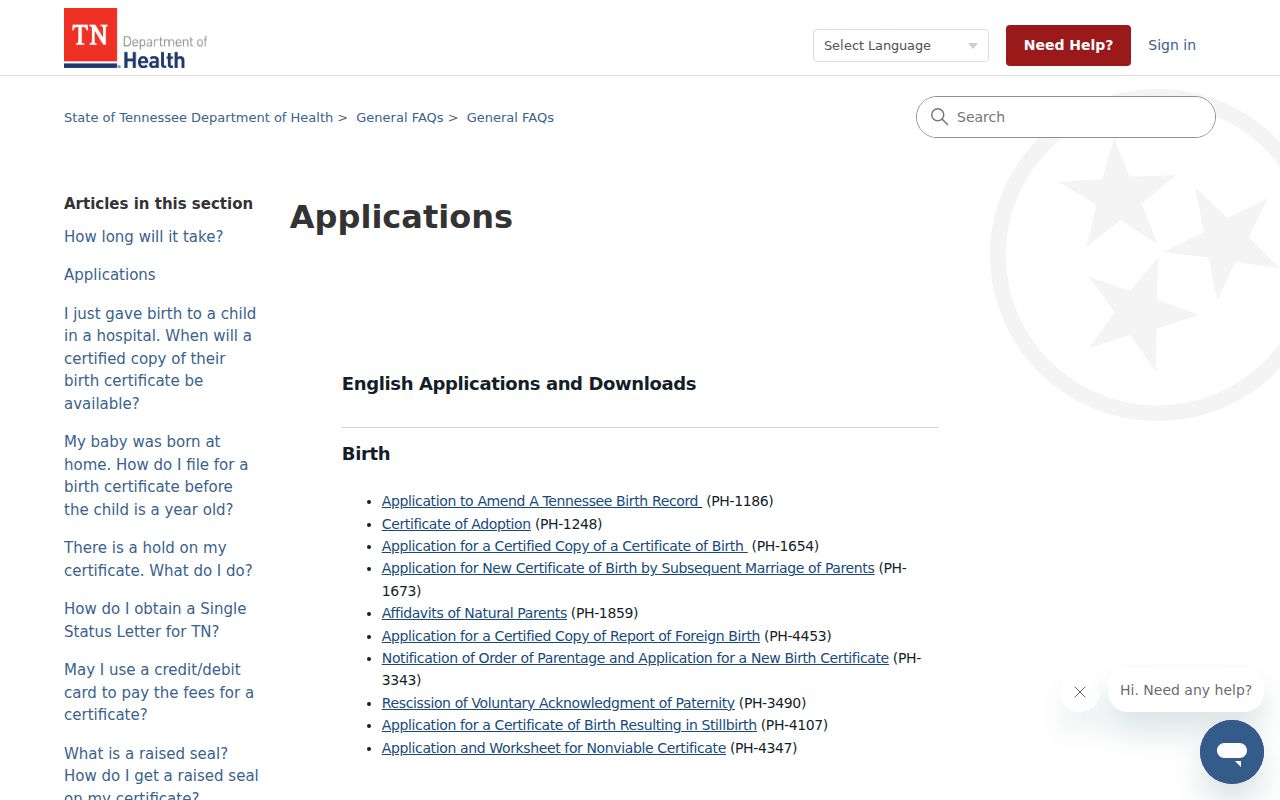
The application page helps a Lebanon searcher choose the correct certificate form before gathering identification and proof of entitlement.
Note: Older family research often shifts to TSLA microfilm, newspapers, probate, cemeteries, and church records rather than a recent-certificate order.
Check Lebanon License Records
Current professional and business trails reach beyond Wilson County. VerifyTN routes searches by profession or licensing board and may return a licensee name, number, type, status, original issue date, expiration, and public discipline. A practice address is not necessarily a home address. Use it to confirm an identity or current credential, then consult the named board if the public result needs context.
The official VerifyTN licensing gateway shows how the state separates professions and search paths.
For businesses, the Tennessee Secretary of State search connects an entity name with status, formation details, registered agent, principal office, and filing history. Lebanon Business Tax and Building Inspection can add the local applicant, operating address, zoning, or certificate-of-occupancy trail by request because no verified citywide license-name portal was found. The official ClaimItTN search can also connect an owner name and city with unclaimed property at no search charge.
Use Lebanon Custody Lookups Carefully
Custody records come from different systems. The Wilson County Sheriff's corrections channel is the local source for current county custody. Ask by full name and date of birth for booking, charges, bond, dates, court, and location as releasable. The statewide Felony Offender Information Lookup covers Tennessee felony custody or supervision, not every Wilson County booking.
The official FOIL form provides the statewide name and TDOC-number route.
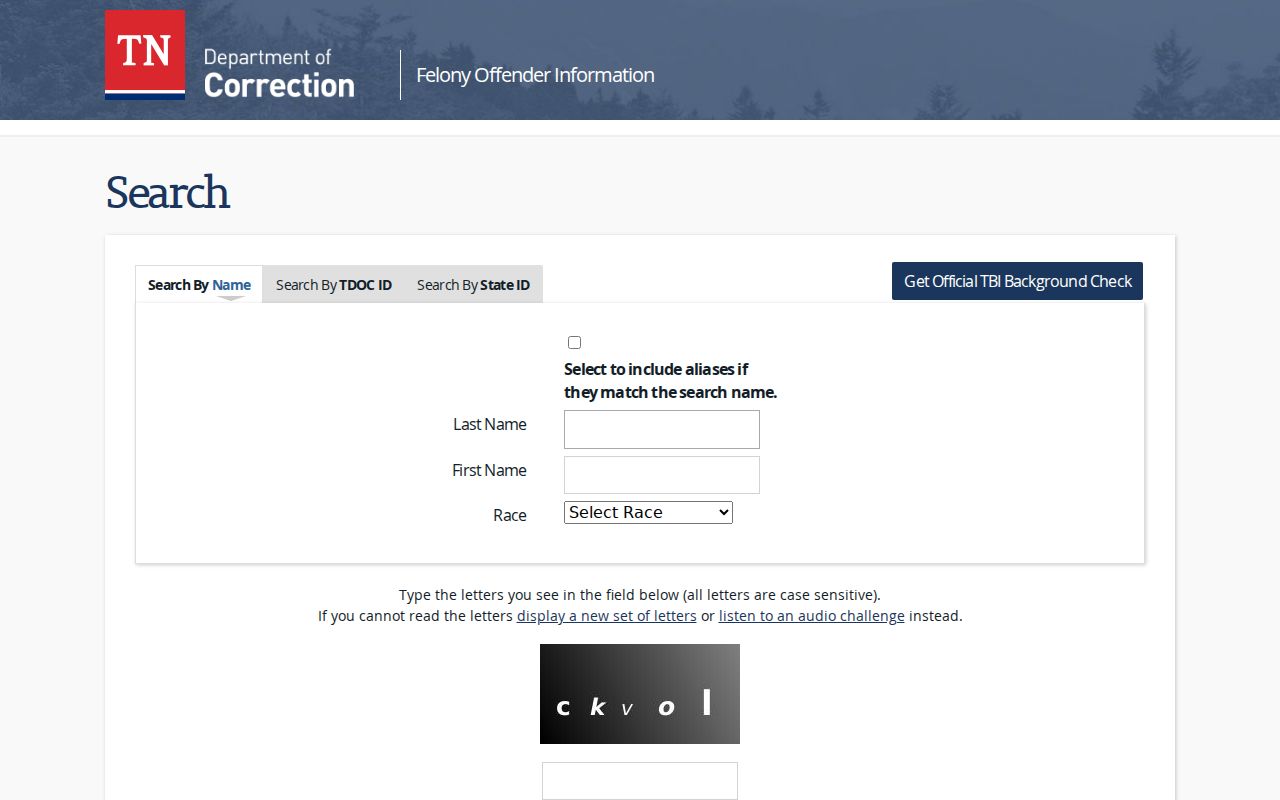
A result can describe identity, status, location, sentence, and release information. Compare it with court records and never merge same-name results without a second identifier.
The TBI Sex Offender Registry is a separate public-safety system with name and geographic searching.
Registry entries include statutory warnings and can change. Confirm current information with TBI or local law enforcement and use it only for a lawful safety purpose.
Trace Lebanon Heirs Across Records
An heir search works best as a sequence. A Wilson County probate file may identify the personal representative, heirs or devisees, creditor claims, and addresses. A deed recorded after a death can show how title passed. An obituary can supply relatives, former names, services, and a cemetery. None is complete on its own, but agreements across all three form a much stronger family trail.
Start with the Probate Clerk when an approximate death date is known. Use any book-page or parcel reference in the estate papers to check deeds. Then compare names with a death certificate, cemetery ledger, newspaper notice, or family history. Women may appear under maiden and married surnames. Repeated family names require dates, middle initials, spouses, parcels, and generations.
For older work, Wilson County Archives and TSLA can supply transferred probate material, county histories, manuscript microfilm, and newspapers. Ask for the record group and inclusive years instead of asking for every item bearing a surname.
Reconnect Through Lebanon Directories
Cumberland University gives Lebanon a distinctive classmate and faculty trail. Current public faculty or staff listings can be paired with catalogs, commencement programs, athletics rosters, alumni publications, and yearbooks. Wilson County Schools pages, old newspapers, and professional license directories can continue a respectful search through public organizational contacts.
The Lebanon-Wilson County Public Library is the local route for printed city or telephone directories, newspapers, obituary files, yearbooks, cemetery compilations, and licensed genealogy databases. Exact directory and microfilm years were not published in the research source, so ask the reference desk for a shelf list before planning a visit. The deeper Lebanon directory routes separate current staff, owner, professional, and historical collections.
Use a public institutional email or main office when reconnecting. Do not assume an authenticated alumni roster or a private group list is open merely because public programs from the same institution exist.
Note: Ask the local library for exact directory and newspaper years because its official online shelf inventory remains unverified.
Recover Missing Lebanon Search Results
An empty web result may reflect coverage, spelling, or jurisdiction instead of a missing record. Wilson Deeds has split index dates. The court site publishes dockets without a verified unified historic name search. Lebanon permit files lack a confirmed citywide public name portal. Cemetery ledgers and many local-history sources require a phone call, counter visit, or archive request.
Try surname-first forms, initials, suffixes, maiden names, spouse names, entity names, and a narrower date range. Search both grantor and grantee roles. For courts, choose the division. For property, preserve leading zeros in the parcel ID. For municipal files, provide the address, department, record type, and approximate date. A narrow request is faster to route and less likely to create avoidable search labor.
Under the Tennessee Public Records Act, Tennessee citizens can inspect open state and local records, subject to specific exceptions. If material cannot be produced promptly, the custodian must act within seven business days by producing it, denying it in writing with a legal basis, or giving a reasonable production estimate. Inspection is generally free; copies and labor may carry authorized costs.
Compare Lebanon Search Sources
Official records are strongest for a defined government event: a filed deed, assessed parcel, court case, license, or vital certificate. Commercial data products compile many sources and can be quick, but they may keep stale addresses or merge two people. Treat a compiled result as a lead, not proof. Return to the named custodian and original document for the fact that matters.
| Source type | Best use | Main limit |
|---|---|---|
| Official online index | Find a current record key or filed event | Coverage and fields vary |
| Custodian copy | Read or certify the original record | Fees, redactions, and eligibility can apply |
| Archive or library | Bridge older years and local context | Often requires staff help or an in-person visit |
| Commercial compilation | Generate a possible lead | May be stale, incomplete, or wrongly merged |
Lawful use only. Public access does not permit stalking, harassment, threats, identity theft, or exposing a protected Safe at Home address.
Verify Every Lebanon Name Match
Lebanon records use the names that people and agencies supplied at the time. An index may store surnames first, omit a middle name, preserve an old spelling, or list a trust or company instead of an individual. A court docket can include several roles. An assessor mailing address may belong to an owner who does not live at the parcel. Participation in an election does not reveal a ballot choice.
Build a small fact grid for each candidate match. Compare full name, date range, spouse or relative, address, parcel, case number, license number, and record role. Reject conflicts instead of explaining them away. When the underlying image or file differs from the index, ask the custodian which record controls and whether a correction process exists.
Privacy rules remain part of the search. Recent vital certificates, sealed or expunged cases, juvenile and adoption material, voter identification numbers, motor-vehicle personal data, and protected addresses can be closed or redacted. A careful Lebanon people search respects those limits while using the wide range of records that Tennessee law leaves open.